Physical Address
304 North Cardinal St.
Dorchester Center, MA 02124
Physical Address
304 North Cardinal St.
Dorchester Center, MA 02124

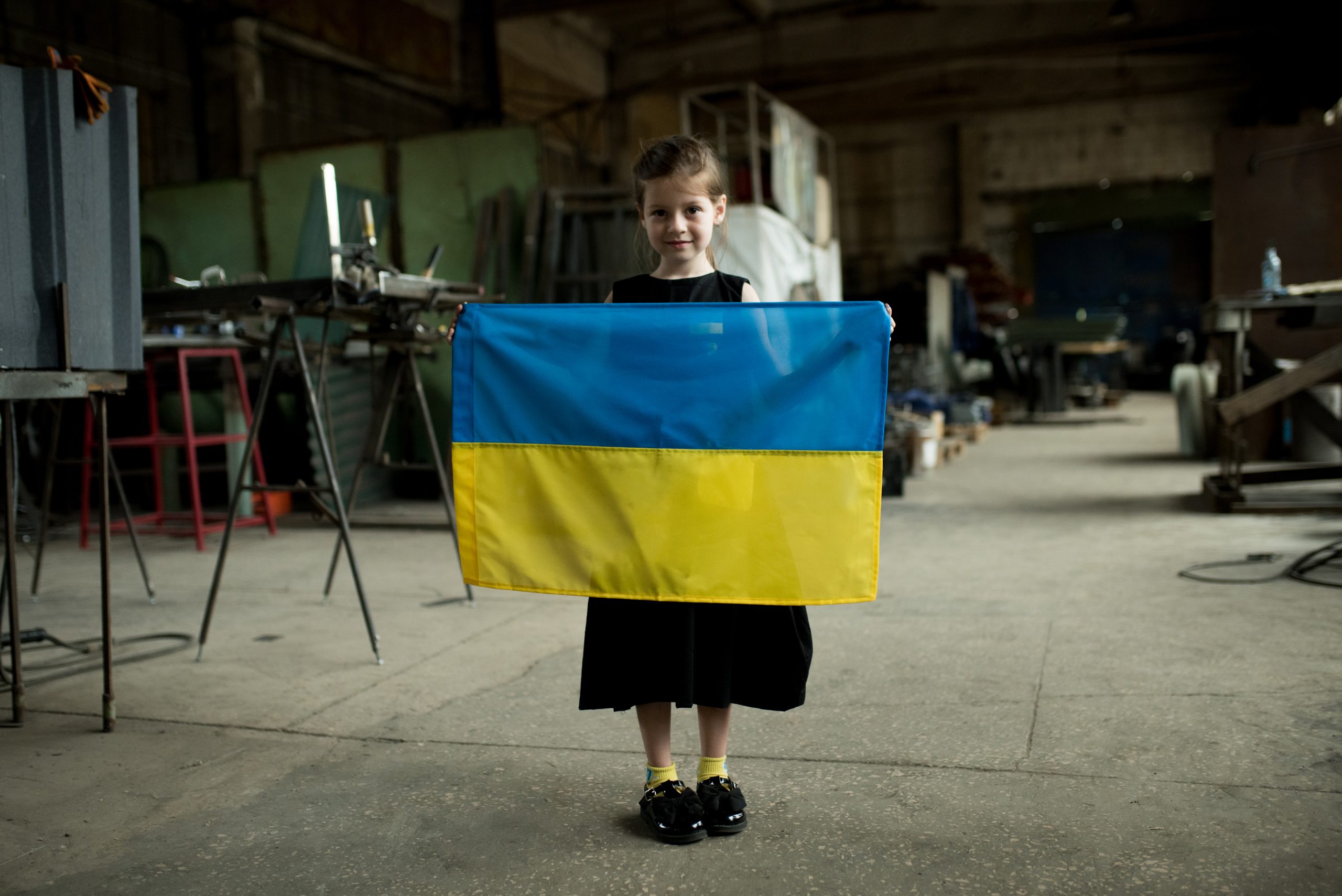
While Russia maintains military pressure on Ukraine, diplomacy is once again moving more strongly into focus. For Kyiv, this is not solely about a ceasefire, but about territorial integrity, security guarantees, and the question of what order should prevail in Europe after the war. At the same time, the economic and humanitarian burden is growing. Reconstruction is now estimated at nearly $588 billion.
Ukraine is entering a particularly sensitive diplomatic phase of the war. More than four years after the start of Russia’s full-scale invasion on February 24, 2022, military escalation, economic strain, and new diplomatic initiatives are unfolding in parallel. President Volodymyr Zelenskyy said on Tuesday that Kyiv had submitted concrete proposals to the United States for ending the war. At the same time, the Ukrainian leadership is making clear that negotiations must not be equated with a unilateral recognition of Russian territorial gains.
This position touches on the core of the conflict. For Ukraine and its European supporters, the question of possible territorial concessions is not only territorial but also relevant under international law. The European Union has repeatedly emphasized that international borders must not be changed by force. The European position is therefore explicitly guided by the principles of the Charter of the United Nations: sovereignty, political independence, and the territorial integrity of states. The diplomatic challenge is to find a path toward negotiations without retrospectively legitimizing the military conquest of territory.
This issue is gaining additional importance because Washington, under President Donald Trump, is pushing more strongly for a negotiated solution. This creates a difficult balancing act for European governments. They support U.S. diplomatic efforts but want to prevent decisions about Ukraine being made without Ukraine. This very principle has now become a central European guideline.
The diplomatic activities are not taking place in a military vacuum. Russia continues its attacks along the front as well as against Ukrainian cities and infrastructure. At the same time, Ukraine has expanded its attacks on militarily and economically relevant targets deep inside Russian territory. These include, in particular, facilities of Russia’s energy and oil industries. Kyiv views such operations as a means of weakening Russia’s ability to finance and wage the war.
Zelenskyy recently announced that Ukrainian attacks on targets deep inside Russia would be expanded. The message behind this is also political: Moscow is meant to recognize that continuing the war will entail rising economic and military costs.
Russia, in turn, continues to use missiles and drones against Ukraine. Civilians have again been killed and injured in attacks on Ukrainian regions in recent days. Zelenskyy also stated that Russia is receiving additional ballistic missiles and military support from North Korea. Regardless of individual military claims, the development demonstrates how strongly the war has become internationalized: Western states support Ukraine, while Russia has deepened its military cooperation with North Korea and Iran, among others.
The front therefore remains an immediate factor in diplomacy. Both sides are attempting to improve their military positions ahead of possible negotiations. Territorial gains, air defense, drone production, and the ability to conduct long-range strikes are increasingly determining the political room for negotiation as well.

For the United Nations, the war also remains a fundamental challenge to its own order. Russia is a permanent member of the UN Security Council with veto power and, at the same time, the power that launched the large-scale attack on Ukraine. As a result, the Security Council’s ability to enforce binding measures is structurally limited.
UN Secretary-General António Guterres has therefore repeatedly called for a peace settlement based on the UN Charter. From the perspective of the United Nations, a sustainable solution must take into account Ukraine’s sovereignty, independence, and territorial integrity. In this respect, the UN position differs from concepts aimed merely at freezing the military front.
The political deadlock in the Security Council does not, however, mean that the UN has been marginalized in Ukraine. United Nations organizations and programs play a central role in humanitarian assistance, refugee protection, human rights monitoring, mine clearance, food security, and reconstruction. In addition, there is the International Atomic Energy Agency and its monitoring of nuclear safety, particularly around the Russian-occupied Zaporizhzhia Nuclear Power Plant.
The war therefore demonstrates both the importance and the institutional limits of the multilateral system: the UN can mitigate humanitarian consequences and document violations of international law, but because of Russia’s veto, it has only limited means to bring the conflict to a political end.
Behind the strategic debates lies a humanitarian crisis whose scale can easily fade from political attention after more than four years of war. Millions of people have been forced to leave their homes, numerous cities and communities have been repeatedly attacked, and regions close to the front in particular continue to face persistent insecurity.
The United Nations continuously documents civilian deaths and injuries. UN human rights monitors regularly point out that the actual number of casualties is likely to be higher than the verified cases, because information from occupied territories in particular is only available to a limited extent.
The humanitarian burden is further exacerbated by damage to energy, water, healthcare, and housing infrastructure. Every additional winter of war increases the demands on electricity supplies, heating systems, and decentralized energy generation. At the same time, Ukraine is competing internationally with numerous other crisis regions for humanitarian funding.
For Europe, the refugee issue also remains relevant. Millions of Ukrainians continue to live outside their country. Since 2022, the EU has established an exceptional protection mechanism for people from Ukraine. As the war continues, however, the political discussion is shifting from short-term reception toward long-term integration, voluntary return, and the question of how future reconstruction can function without a sufficient share of Ukraine’s working-age population.
Economically, Ukraine has demonstrated remarkable adaptability but remains heavily dependent on international financing. In July, the International Monetary Fund completed the first review of the current four-year Extended Fund Facility program. This made approximately $690 million immediately available. According to the IMF, Ukraine met all quantitative criteria for the end of March, while some structural reforms were implemented with delays.
The decisive economic policy question is therefore not only whether the Ukrainian economy is growing, but how long the state can simultaneously finance the war, social spending, and reconstruction. Defense expenditure accounts for an exceptionally high share of public funds. Without support from the EU, the G7 countries, the IMF, and other partners, this financing would hardly be sustainable.
This creates a dual dependency: Ukraine needs short-term funds to stabilize its budget and long-term capital for investment. International donors are increasingly linking their support to requirements concerning anti-corruption measures, corporate governance of state-owned enterprises, tax administration, and the rule of law.
These reforms are also part of Ukraine’s path toward the European Union. War assistance, reconstruction, and EU accession policy can therefore increasingly no longer be separated from one another.
The scale of the economic challenge is illustrated by the fifth joint damage and needs assessment published in February by the Ukrainian government, the World Bank, the European Commission, and the United Nations. According to the assessment, nearly $588 billion will be needed for Ukraine’s reconstruction and recovery over the next ten years. This corresponds to almost three times Ukraine’s estimated nominal gross domestic product for 2025. Direct war damage had already exceeded $195 billion by the end of 2025. Housing, transport, and energy have been particularly affected.
Prime Minister Yulia Svyrydenko noted when the assessment was published that Ukraine continues to function economically despite the attacks while simultaneously carrying out repairs. For 2026 alone, projects worth more than $15 billion were identified for priority reconstruction and support measures.
These figures are changing the international debate. Reconstruction cannot begin only after a formal peace agreement. Electricity grids, housing, schools, hospitals, roads, and businesses must already be repaired or replaced during the war. At the same time, it is clear that public funds alone will not be sufficient.
The World Bank, the EU, and other international institutions are therefore attempting to mobilize private capital. This requires guarantees against war risks, transparent procurement procedures, and a robust legal framework. Anti-corruption efforts are thus becoming an economic factor: the more reliably Ukrainian institutions operate, the easier it will be to mobilize long-term investment.
Ukraine’s candidate status and accession negotiations with the European Union therefore have significance that extends far beyond foreign policy. EU accession would require a comprehensive alignment of Ukraine’s legal and economic framework with European standards—from competition law and public procurement to environmental and energy policy, as well as the judiciary, agriculture, and financial supervision.
The war is accelerating some of these integration processes while making others more difficult. On the one hand, Ukraine is more economically connected to the EU than ever before. On the other hand, political obstacles remain within the Union, particularly because decisions on further steps in the accession process require unanimity.
For Kyiv, this means implementing reforms under conditions in which a large share of state resources is simultaneously required for defense. For Brussels, in turn, the question is how a large, agriculturally significant, and war-damaged economy can be integrated into existing EU structures. The consequences range from agricultural policy to the European budget.
At the same time, the EU is continuing its sanctions policy against Russia. At the beginning of August, the Council added further individuals to its sanctions lists who are accused of supporting Russia’s military-industrial complex.
The strategic importance of sanctions increasingly lies less in individual asset freezes than in the question of how Russia can be denied long-term access to technology, financial services, and revenues from energy exports. Particular attention is being paid to the so-called shadow fleet, which Russia uses to transport oil outside Western insurance and control systems, as well as to the circumvention of export controls via third countries.
A second point of contention concerns frozen assets of the Russian central bank. The EU and the G7 are already using proceeds from immobilized Russian state assets to support Ukraine. A complete confiscation of the assets themselves, however, remains legally and financially controversial. Here, the political desire to hold Russia accountable for war damage clashes with concerns regarding property rights, sovereign immunity, and the stability of international financial markets.
The decisive question of the coming diplomatic phase is therefore not only whether a ceasefire can be achieved. An end to hostilities would have immediate significance for millions of people. But the more difficult questions begin afterward: Who guarantees Ukraine’s security? Which troops may be stationed where? What happens to the occupied territories? How will sanctions be handled? Who will finance reconstruction and compensation? And which international institution will oversee an agreement?
For Kyiv, it is crucial that a ceasefire does not merely create a pause that Russia could use for military reorganization. European states have therefore been discussing robust security guarantees and possible contributions to a multinational presence following an agreement for some time.
The war in Ukraine has therefore come to involve far more than the course of a frontline. At stake is whether territorial conquests can permanently create political facts and what value security commitments, international treaties, and the UN Charter possess.
The military situation may change, as may the positions of Washington, Moscow, and European capitals. The structural problems, however, remain. Without security guarantees, a ceasefire risks remaining unstable. Without international financing, Ukraine will struggle to sustainably maintain its state functions and reconstruction. Without institutional reforms, private capital will flow only to a limited extent. And without a political solution to the territorial question, even an end to active fighting would initially amount only to an interruption of the conflict.
For the United Nations and Europe, it will therefore be decisive whether a future peace order not only ends the shooting but also preserves the rules on which the European security order has been based since 1945. The Ukrainian question is thus also a question of the resilience of the international order itself.


