Physical Address
304 North Cardinal St.
Dorchester Center, MA 02124
Physical Address
304 North Cardinal St.
Dorchester Center, MA 02124


With two new executive orders, US President Donald Trump has once again escalated his fight over so-called birthright citizenship — the automatic right to citizenship for children born on US soil. Just weeks after a defeat at the Supreme Court, the White House is attempting to narrow the scope of the 14th Amendment through a new approach. The measures target so-called “birth tourism” as well as certain case scenarios in which, according to the administration, automatic citizenship should no longer apply going forward. Legal experts are already expecting a new wave of lawsuits.
Early in his second term, Trump had already tried to fundamentally restrict the birthright citizenship principle via executive order. Several federal courts halted the order, and the Supreme Court ultimately rejected the administration’s central approach. Now the White House is responding with two more narrowly tailored orders that, according to the administration, were designed to align with the Court’s legal requirements.
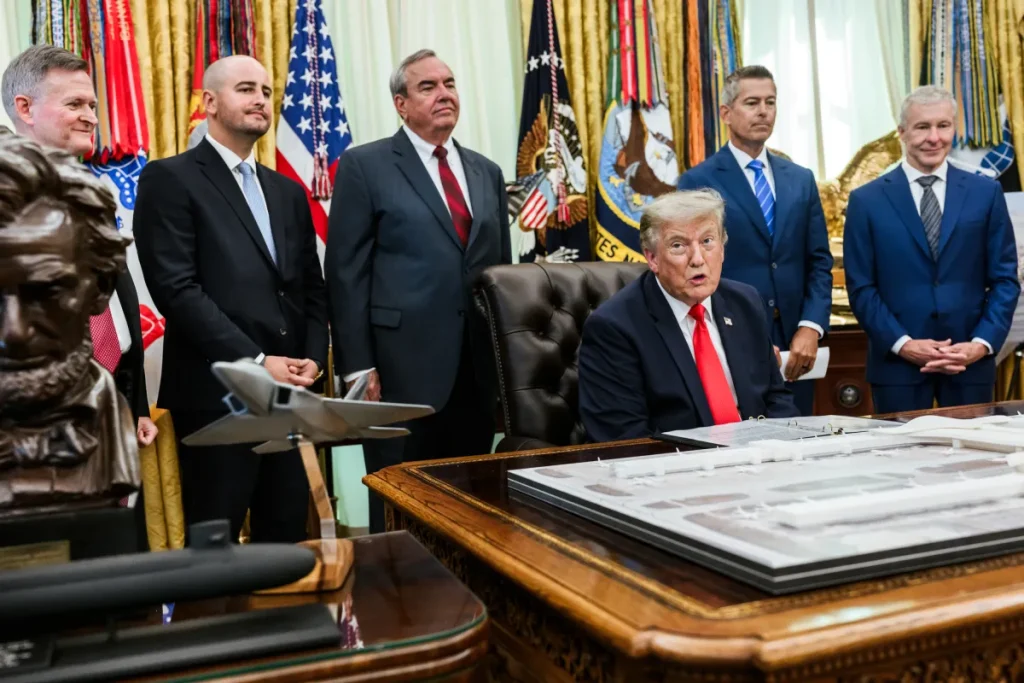
At the signing, Trump made clear that he would not change course. The new measures, the president said, were “adjustments” following the Supreme Court’s ruling. Asked whether the orders would withstand renewed constitutional scrutiny, Trump replied: “I think it will.”
One focus of the new orders is the fight against so-called “birth tourism” schemes — trips to the United States undertaken with the goal of giving birth to a child there who automatically receives US citizenship by virtue of being born on American soil.
According to the White House, the State Department, together with the Department of Homeland Security, is now to act significantly more forcefully against providers offering such services. Visas are to be scrutinized more closely, and organized business models built around the practice are to be pursued more aggressively. The administration argues that the existing system is being deliberately exploited and runs counter to the actual intent of the 14th Amendment.
Among the most vocal supporters is Trump’s deputy chief of staff, Stephen Miller. He defended the new orders on the grounds that they target abuse of the American immigration system and organized business models built around so-called birth trips. According to the administration, the new rules rely on narrower exceptions that it considers consistent with existing case law.
Reactions from the opposition were sharp. Leading Democratic politicians accuse the administration of once again seeking a direct confrontation with the Constitution. In their view, the 14th Amendment is unambiguous: anyone born in the United States and subject to its jurisdiction is a US citizen.
Several Democratic governors and attorneys general have already announced they will seek judicial review of the new executive orders. Civil rights organizations such as the ACLU are likewise preparing new lawsuits. They argue that the president cannot alter fundamental constitutional rights by executive order.
Within the Republican camp, by contrast, Trump’s approach enjoys broad support. Conservative politicians view the new measures as a necessary step to curb irregular migration and close legal loopholes.
They argue that birthright citizenship was never originally intended to apply to people who are in the United States only temporarily or unlawfully. However, this interpretation is not shared by the overwhelming majority of American constitutional scholars.
The development is also being closely watched outside the United States. European diplomats and international law experts see the dispute as further evidence of how deeply domestic political battles in the United States now touch on fundamental constitutional questions.
For many governments, the focus is less on the specific immigration policy itself than on the question of how resilient American institutions remain when the president, the courts, and the states interpret core constitutional issues differently.
The White House’s biggest challenge is again likely to lie in the courts. Birthright citizenship has been shaped by more than a century of Supreme Court jurisprudence. Numerous constitutional scholars therefore consider the new executive orders vulnerable to legal challenge as well.
Whether the administration has this time found a viable legal construction, or will fail once again, will likely ultimately be for the Supreme Court to decide.
With the new executive orders, Donald Trump is making clear that immigration policy remains one of his central political issues in his second term as well. The measures against birthright citizenship and against “birth tourism” are aimed at his core political base and underscore the administration’s ambition to fundamentally reshape American immigration policy.
At the same time, this very likely marks the start of a new round of legal battles. While the White House speaks of a necessary correction, critics see yet another attempt to narrow the clear wording of the 14th Amendment through presidential orders. As a result, the dispute over automatic US citizenship is likely to extend far beyond the current debate — and once again become one of the most significant constitutional conflicts in the United States.
Images: © White House Gallery


