Physical Address
304 North Cardinal St.
Dorchester Center, MA 02124
Physical Address
304 North Cardinal St.
Dorchester Center, MA 02124


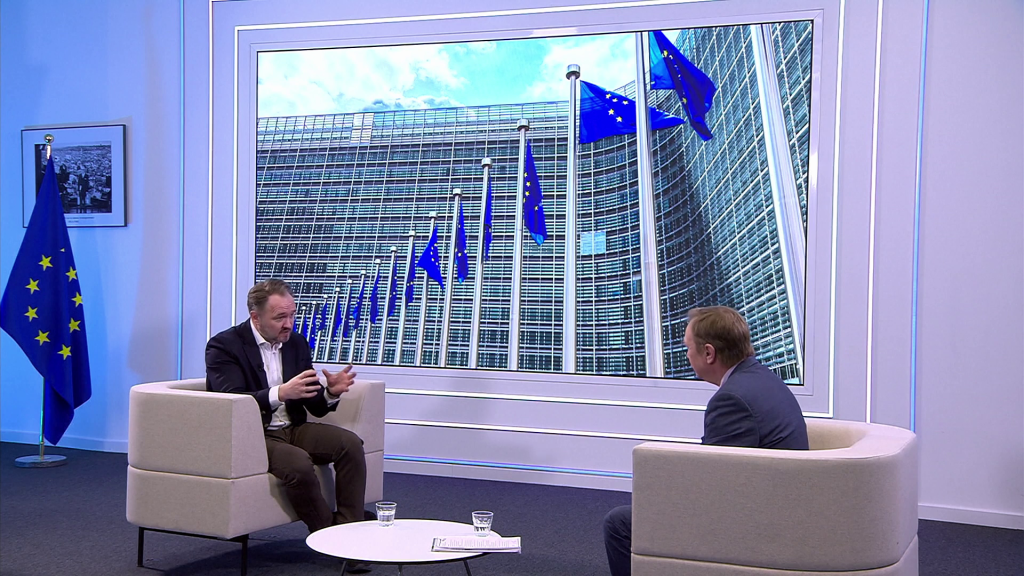
In an era marked by geopolitical uncertainty, economic recalibration, and social fragmentation, one issue has steadily ascended the European agenda with quiet urgency: housing. An interview in the EU Insights series with Dan Jørgensen on the European Union’s emerging Affordable Housing Plan sheds light on a crisis that is no longer confined to national borders, but instead reveals itself as a structural challenge of continental scale.
What was once treated as a domestic policy field—firmly anchored in the sovereignty of member states—has now evolved into a shared European concern. Dan Jørgensen, Commissioner for Energy and Housing, makes clear that the European Union is not merely observing this transformation; it is beginning, cautiously yet decisively, to shape it.
For decades, housing policy has been governed at the national, regional, or municipal level. This subsidiarity reflected both political tradition and practical necessity. Yet the conditions underpinning this arrangement have changed fundamentally.
Across Europe, housing markets have undergone profound transformations. Urbanization, demographic shifts, and increased mobility have intensified demand in economic centers. Simultaneously, financial markets have discovered housing as a stable and lucrative asset class. The result is a dual pressure: rising demand colliding with constrained supply—amplified by speculative investment.
Jørgensen underscores that this is no longer a cyclical imbalance but a structural disequilibrium. From Lisbon to Berlin, from Dublin to Prague, housing affordability has deteriorated to a degree that challenges the social fabric itself.
Young professionals delay family formation. Essential workers—teachers, nurses, public servants—are priced out of the very communities they sustain. Rural areas, meanwhile, face a different but related dilemma: depopulation, decay, and a lack of investment.
Thus emerges a paradox: abundance of capital, scarcity of accessible homes.
Housing, as emphasized in the discussion, is not merely a commodity. It is the precondition of social participation, economic stability, and human dignity. When access to housing becomes precarious, the consequences extend far beyond the real estate market.
This points to a growing risk of social stratification. Those with access to property accumulate wealth; those without face increasing precarity. This divergence feeds broader inequalities, undermining the promise of social mobility that has long defined the European project.
Moreover, housing insecurity carries political ramifications. Citizens who feel excluded from basic economic security are more susceptible to disillusionment and populist narratives. In this sense, the housing crisis is not only a social and economic issue—it is a democratic one.
Against this backdrop, the European Union’s Affordable Housing Plan represents a notable departure from past practice. While the EU lacks direct legislative authority over housing markets, it possesses powerful indirect instruments: funding mechanisms, regulatory frameworks, and coordination platforms.
Dan Jørgensen highlights several pillars of the emerging strategy:
1. Mobilizing Investment
The EU aims to channel both public and private capital into affordable and social housing projects. This includes leveraging institutions such as the European Investment Bank and expanding access to structural funds.
2. Aligning with the Green Transition
Housing policy is increasingly intertwined with climate objectives. Renovation, energy efficiency, and sustainable construction are not only environmental priorities but also opportunities to expand housing supply.
3. Facilitating Knowledge Exchange
Member states differ widely in their housing systems. By promoting best practices—whether in rent regulation, cooperative housing, or urban planning—the EU seeks to create a framework for mutual learning.
4. Addressing Market Distortions
While the EU cannot directly regulate housing markets across all member states, it can influence the conditions under which these markets operate, particularly in areas such as state aid rules and financial regulation.
One of the most compelling themes is the unresolved tension between housing as an investment and housing as a social good.
Over the past decades, the financialization of housing has transformed real estate into a global asset class. Institutional investors, pension funds, and private equity firms have entered markets at an unprecedented scale. While this influx of capital has increased liquidity and development, it has also contributed to rising prices and speculative dynamics.
This does not advocate for a rejection of market mechanisms. Rather, it calls for a recalibration: a recognition that housing markets must be embedded within a broader social framework.
This raises fundamental questions: To what extent should housing be shielded from speculation? How can public authorities ensure long-term affordability? What balance should be struck between private profit and public need?
These questions, while economic in form, are ultimately political in substance.
If the diagnosis of the crisis is increasingly shared, the path toward resolution remains contested. The success of the EU’s housing initiative will depend less on its ambition than on its practical execution.
Coordination across governance levels—European, national, regional, and local—will be essential. So too will be the alignment of financial incentives, regulatory frameworks, and political will.
This suggests cautious optimism. There is a growing recognition among policymakers that inaction carries greater risks than intervention. Yet it also acknowledges the complexity of the task: housing systems are deeply embedded in national traditions, legal frameworks, and cultural expectations.
This frames housing not as an isolated policy field, but as a lens through which broader transformations of European society become visible.
The housing crisis intersects with: the green transition, demographic change, economic inequality, and the resilience of democratic institutions
It is, in essence, a question of how Europe organizes the material conditions of life for its citizens.
The European Union’s engagement in this domain marks a subtle but significant shift: from a union of markets toward a union that increasingly confronts the social consequences of those markets.
Whether this shift will succeed remains uncertain. But one conclusion emerges clearly from the interview: affordable housing is no longer a peripheral concern. It is a central test of Europe’s capacity to reconcile economic dynamism with social cohesion.


